

What this covers
A regas that lasts three months is not a repair. We pressure-test the system and trace the leak with dye or an electronic detector before putting gas into it.
Booked in for this? Owners often ask about adas calibration in Dubai, brake & tyre service at our Al Quoz workshop and our clutch repair work at the same time — one visit covers all of it.
The work
Leak detection
Pressure test plus dye or electronic tracing, so the same fault does not return.
Compressor and clutch
Diagnosed and replaced where the compressor has actually failed.
Condenser and radiator pack
Cleaned or replaced — Dubai dust blocks them faster than anywhere.
Cabin filter and vents
Replaced, with the evaporator treated where there is a smell.
Marques we service
This work is done on all fifteen marques below.
-
 Bentley
Continental GT, Bentayga, Flying Spur
Bentley
Continental GT, Bentayga, Flying Spur
-
 BMW
M, X and 3/5/7 Series
BMW
M, X and 3/5/7 Series
-
 Mercedes-Benz
AMG, S-Class, G-Class
Mercedes-Benz
AMG, S-Class, G-Class
-
 Porsche
911, Cayenne, Panamera, Macan
Porsche
911, Cayenne, Panamera, Macan
-
 Range Rover
Sport, Velar, Evoque, Defender
Range Rover
Sport, Velar, Evoque, Defender
-
 Rolls-Royce
Ghost, Wraith, Cullinan
Rolls-Royce
Ghost, Wraith, Cullinan
-
 Lamborghini
Urus, Huracán, Aventador
Lamborghini
Urus, Huracán, Aventador
-
 Ferrari
488, Roma, Portofino
Ferrari
488, Roma, Portofino
-
 Audi
RS, Q and A Series
Audi
RS, Q and A Series
-
 Maserati
Ghibli, Levante, Quattroporte
Maserati
Ghibli, Levante, Quattroporte
-
 Alfa Romeo
Giulia, Stelvio
Alfa Romeo
Giulia, Stelvio
-
 Jaguar
F-Pace, XF, F-Type
Jaguar
F-Pace, XF, F-Type
-
 Mini Cooper
Cooper S, Countryman, JCW
Mini Cooper
Cooper S, Countryman, JCW
-
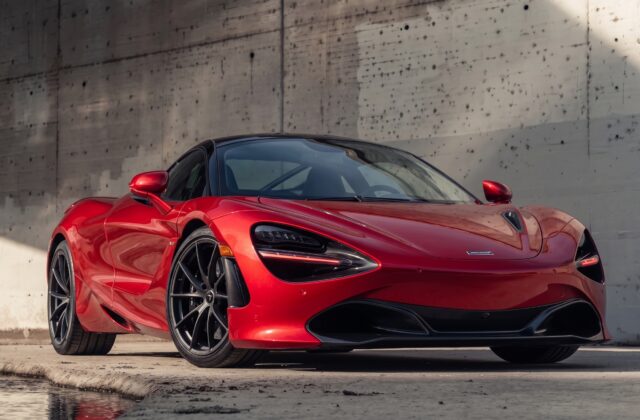 McLaren
570S, 720S, GT
McLaren
570S, 720S, GT
-
 Aston Martin
DB11, Vantage, DBX
Aston Martin
DB11, Vantage, DBX
-
 Cadillac
Escalade, CT5, XT6
Cadillac
Escalade, CT5, XT6
-
 Dodge & RAM
Challenger, Charger, RAM TRX
Dodge & RAM
Challenger, Charger, RAM TRX
-
 Jeep
Wrangler, Grand Cherokee, Gladiator
Jeep
Wrangler, Grand Cherokee, Gladiator
-
 Ford Mustang
GT, EcoBoost, Shelby
Ford Mustang
GT, EcoBoost, Shelby
-
 Corvette
C7 and mid-engine C8
Corvette
C7 and mid-engine C8
-
 Volvo
XC90, XC60, S90, T8 Recharge
Volvo
XC90, XC60, S90, T8 Recharge
-
 Mercedes-AMG
C 63, E 63, GT 63, G 63
Mercedes-AMG
C 63, E 63, GT 63, G 63
-
 Mercedes-Maybach
S 580, S 680, GLS 600
Mercedes-Maybach
S 580, S 680, GLS 600
-
 Lotus
Emira, Evora, Exige
Lotus
Emira, Evora, Exige
-
 Bugatti
Veyron, Chiron — care and storage
Bugatti
Veyron, Chiron — care and storage
-
 Pagani
Zonda, Huayra — care and storage
Pagani
Zonda, Huayra — care and storage
-
 Koenigsegg
Agera, Regera, Jesko — care
Koenigsegg
Agera, Regera, Jesko — care
Questions
My AC gets cold then stops — why?
Commonly a pressure switch, a partial blockage or a leak that empties the system. All three need diagnosis, not gas.
How often should the AC be serviced?
Manufacturer intervals in this region run 12 months or 15,000 to 16,000 km, but Dubai heat shortens that in practice: we recommend about 10,000 km between oil services. Sand and short summer trips matter as much as distance. Air conditioning work here is from AED 250.
Can you fix a bad smell from the vents?
Yes — usually the cabin filter and evaporator, treated together.
How much does air conditioning work cost in Dubai?
From AED 250 at our workshop in Al Quoz. The figure moves with the car and with what the check finds, so treat it as a starting point rather than a quote. It covers a pressure and leak test, then R134a or R1234yf gas to the correct specification — not a top-up over a leak. You see the itemised estimate before any work begins.
How long does air conditioning work take?
Normally the same working day. We book a slot rather than a queue, so the car is worked on when you bring it in. If the job turns out to need longer once it is apart, you hear the reason and the new date before we carry on.
Is the work covered by a warranty?
Yes — 6 months on parts and labour for work carried out in our own workshop in Al Quoz. Where a part carries its own manufacturer cover, that applies on top. The term goes into the estimate before you approve the job, not into the invoice afterwards.
Car Air Conditioning Repair in Dubai
A regas that lasts three months is not a repair, and in this city an air conditioning system is not a comfort feature. Every system loses a small amount of refrigerant over time by design, but a system that empties within a season has a leak, and adding gas to it simply postpones the same conversation at your expense. We pressure-test and trace the leak before putting refrigerant into anything.
Leaks are found with dye or an electronic detector rather than by inference. Common sources are the condenser, which sits at the front of the car and suffers from stone damage and corrosion, the compressor shaft seal, and the o-rings at pipe junctions where heat cycling eventually takes its toll. Each is a different repair at a different cost, and knowing which one you have before work starts is the point of the exercise.
Dust deserves its own mention because it affects air conditioning more here than almost anywhere. The condenser sits directly behind the front grille and fills with fine airborne dust, reducing its ability to shed heat while every component remains technically functional. A system that cools poorly in traffic and adequately at speed is frequently telling you about a blocked condenser rather than about refrigerant level.
Cabin filters load up far faster here than the service interval assumes, and a blocked filter reduces airflow, strains the blower motor and eventually produces a smell from the evaporator as moisture sits in the housing. Replacing the filter is inexpensive; treating a neglected evaporator afterwards is less so. On cars with rear climate zones we check that circuit separately, since a weak rear system with a strong front one is a specific fault rather than general underperformance.
Compressors are diagnosed rather than assumed. A compressor that will not engage may have failed, or may be prevented from engaging by a pressure switch, a low charge or an electrical fault — three cheap causes and one expensive one. We check all four before quoting the expensive answer, because a compressor is one of the more costly components on the car.
Book by phone or WhatsApp. Tell us whether the cooling is weak, intermittent, or absent, and whether there is a smell — the three point in different directions and it helps us plan the diagnosis.
One point about servicing frequency. An annual check before the hottest months is worth more than a repair in July, when every workshop in the city is full and a week without air conditioning is genuinely difficult. A check tests pressures, measures vent temperature and inspects the condenser, and it catches a slow leak while it is still a small repair. Booking in March or April rather than waiting for the first failure is the single most practical piece of advice we give on this subject.