
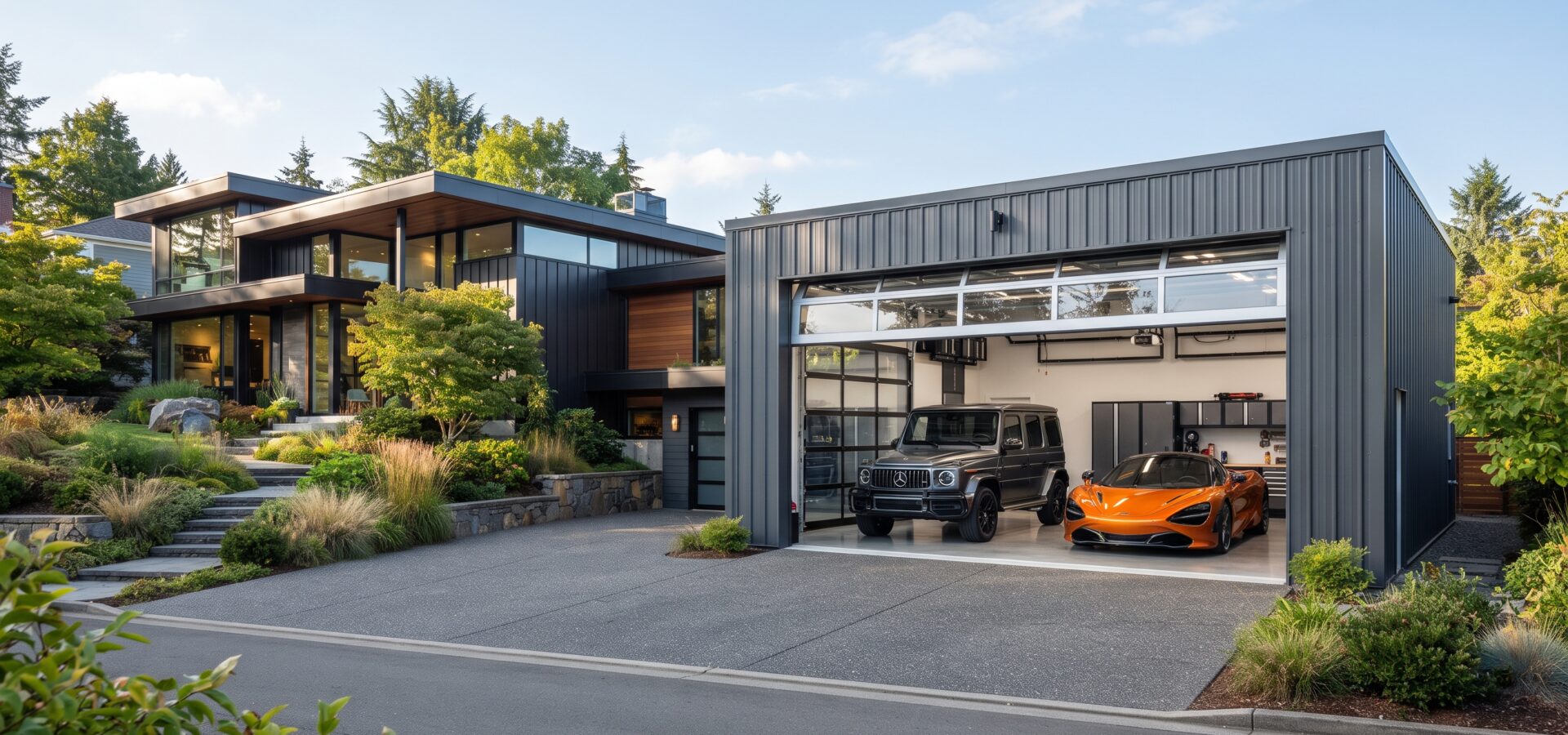
Choosing the right structure to house and service your vehicles is a major decision. Whether you are setting up a dedicated car repair garage for daily drivers or a specialized clean-room setup for high-end vehicle maintenance, the debate usually boils down to two main options: modern prefab metal garages and traditional stick-built (wood-framed) structures.
If you are weighing your options for a new build in 2026, this comprehensive cost and time comparison will help you decide which garage best fits your budget, timeline, and automotive ambitions.
The Core Dilemma: Metal vs. Wood for Automotive Enthusiasts
When you invest in automotive care—ranging from routine fluid checks on a daily driver to complex diagnostics for a Mercedes Benz service or specialized engine tuning during Lamborghini maintenance—your workspace needs to be reliable, secure, and properly dimensioned.
Traditional wood-framed garages have been the historical standard, but prefabricated steel buildings have surged in popularity due to their superior structural span, lower maintenance, and rapid assembly.
Cost & Time Comparison Table
To give you a clear baseline, here is how a standard two-car garage (approx. 24×30 feet) compares in terms of initial investment and construction timeline:
| Feature / Factor | Prefab Metal Garage | Traditional Stick-Built Garage |
|---|---|---|
| Material Costs | $8,000 – $15,000 (pre-engineered kits) | $12,000 – $22,000 (lumber, drywall, siding) |
| Labor Costs | $3,000 – $6,000 (faster assembly) | $10,000 – $20,000 (extended on-site labor) |
| Total Estimated Cost | $11,000 – $21,000 | $22,000 – $42,000+ |
| Construction Time | 3 to 7 days | 3 to 6 weeks |
| Maintenance Cost (10-yr) | Very low (rust-resistant coatings) | Moderate (painting, termite treatment, roofing) |
| Clear-Span Interior | 100% open-span (no interior load-bearing posts) | Often requires posts or engineered trusses |
1. Speed of Erection: Getting to Work Faster
Time is money, especially if you are eager to move your tools indoors.
- Prefab Metal Garages: Because components are pre-cut, pre-drilled, and engineered at a factory before being shipped to your site, assembly is remarkably fast. A standard crew can erect the primary steel frame and sheeting in just a few days. For an independent mechanic or enthusiast eager to start a car repair garage operation, this minimizes downtime and site disruption.
- Traditional Stick-Built Garages: Wood framing requires stick-by-stick construction on-site. Weather delays, lumber cutting, framing, sheathing, and exterior finishing easily stretch the timeline to several weeks.
2. Durability and Climate Control for Precision Maintenance
Protecting high-value machinery requires structural integrity and environmental stability.
- Longevity & Resistance: Steel structures are impervious to termites, rot, and mold. They also offer superior wind and snow load ratings. When properly insulated, a metal building stands strong against extreme weather without warping or sagging.
- Suitability for High-End Service: Whether you are performing a sensitive Mercedes Benz service that requires immaculate dust control or storing exotic aluminum-bodied supercars requiring strict humidity regulation during Lamborghini maintenance, a prefab metal building can be easily outfitted with closed-cell spray foam insulation and heavy-duty HVAC systems to maintain a controlled climate year-round. Furthermore, the complete lack of interior load-bearing pillars allows for optimal placement of two-post and four-post car lifts.
3. Building Permits and Zoning Requirements
Before breaking ground, you must navigate local municipal regulations.
- Permit Process: Both metal and wood-certified garages require building permits in most jurisdictions. However, prefab metal garage manufacturers typically provide certified engineering blueprints stamped by a local professional engineer (PE), which often streamlines the approval process with your city’s building department.
- Zoning Considerations: Local zoning laws dictate setback distances, maximum height limits, and exterior aesthetics (some HOAs or historic districts mandate matching siding, such as brick or stucco veneer, which can be easily applied to the exterior of a metal structure).
Final Verdict: Which Should You Choose?
If your priority is cost-efficiency, rapid deployment, maximum unobstructed interior space for heavy equipment, and low long-term maintenance, a prefab metal garage is the undisputed winner. It provides a robust, professional-grade shell ideal for everything from a backyard car repair garage to a specialized exotic car sanctuary.
Frequently Asked Questions (FAQ)
Can I install a car lift in a prefab metal garage?
Yes, provided you pour a concrete slab of adequate thickness (typically 6 inches of reinforced concrete) and specify a center height and roof pitch high enough to accommodate raised vehicles.
Do metal garages rust over time?
Modern prefab metal buildings use galvanized steel framing and high-grade exterior panels coated with protective anti-corrosion paint systems, making them highly resistant to rust.
Are metal garages harder to heat and cool?
Not if properly insulated. Using spray foam insulation creates an airtight thermal envelope, making climate control just as efficient as in a traditional wood-framed garage.